Blog
From January to June 2023, I was immersed in the practices for community-building and civic action cultivated by the Civic Action and Community Programs team within the Helsinki Deaconess Foundation/Diakonissalaitos (DF), thanks to a Mid-Career Professional Development Award from the Fulbright Finland Foundation and the generosity of the then 30+ person team in welcoming me as a participant-observer and peer.
I spent my time mostly within three community centers or “D-stations” DF operates in Helsinki, accepting all invitations and showing up whenever I would not be in the way as an English language speaker.
As I spent time immersed in the D-stations, I quickly realized that my real interest lay in the skills and tactics that the D-station’s professional staff used to empower residents towards civic action.
D-stations, or D-asemat, are community centers that function as neighborhood meeting spaces, where activities are organized by residents themselves with support of DF staff, who also identify and address community needs as relevant to and in collaboration with residents.
My original project, proposed to Fulbright Finland in my application, was called “From volunteer to peer: Learning from a Finnish model for community development.” As I spent time immersed in the D-stations, I quickly realized that my real interest lay in the skills and tactics that the D-station’s professional staff used to empower residents towards civic action.
It’s no surprise that this is what caught my attention. As the executive director of a well-established center for civic engagement at the University of Richmond in Richmond, Virginia, I am committed, alongside my colleagues in the center, to linking students, faculty, community organizations and community members in connections rooted in egalitarianism, trust, and respect.
Rather than being and doing for and serving others, our aim is for participants in the activities and relationships supported by our center to understand themselves as being and doing with one another, to understand their responsibilities to a collective good. And yet, in my second decade of stewarding the center’s collaborative work, I knew how hard it actually is to establish spaces in which participants from across lines of social difference can experience that collective sense of belonging.
As I listened, observed, and participated in DF’s D-stations, and reflected with the network of staff and volunteers who steward what happens there, I began to see consistent patterns, ways of working and being that actively supported DF’s mission towards civic action.
I came to think of these patterns as the “practice of community,” and I began to document the specific, repeated practices I saw in play across the D-stations and by multiple staff.
Immediately before leaving Finland in June 2023 at the end of the grant period, I presented my draft research findings to the Civic Action and Community Programs staff at the Deaconess Foundation, in a workshop designed to elicit feedback. The collaboration did not end there.
Over the next 1.5 years, and thanks to many early morning (U.S.)/late afternoon (Finland) Teams meetings, I revised the report in dialogue with the DF staff and in light of conversations with key collaborators Saija Karjala and Laura Hakoköngäs, who also worked on the Finnish version of the project and wrote the English publication’s foreword.
In November 2025, I was delighted to return to Finland for a two-week visit to celebrate the joint publications emerging from the first Fulbright Finland grant.
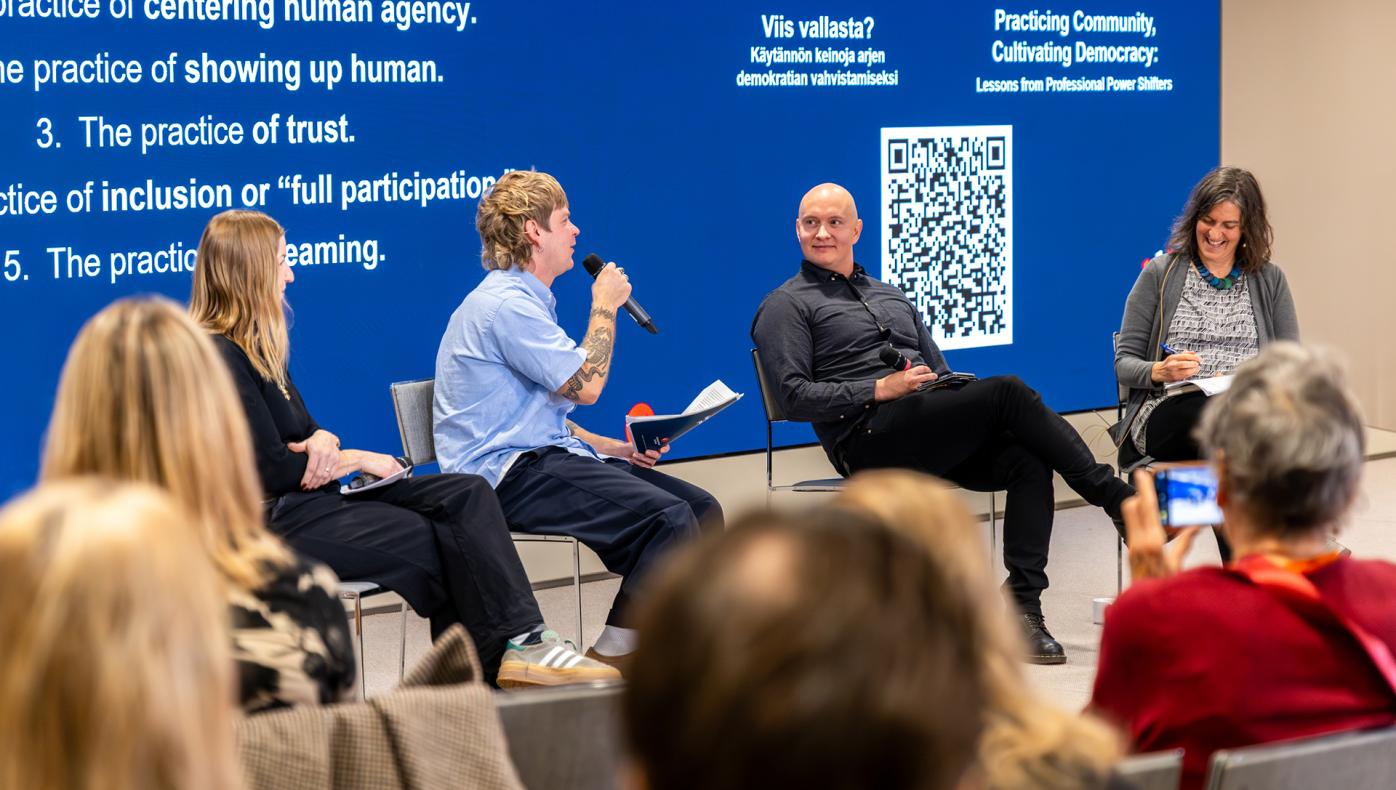
Those publications, called Practicing Community, Cultivating Democracy: Lessons from Professional Power Shifters (S. Gale) and Viis Vallasta? Käytännön keinoja arjen demokratian vahvistamiseksi (L. Hakoköngäs, S. Karjala, H. Myllynen) outlined five practices for cultivating community building and civic action, observed among professional staff in the Deaconess Foundation’s D-stations.
Since completing the first draft of the report in June 2023, I have presented this work 4 times in the U.S. and at least 8 times to Finnish audiences, including the recent presentations in Helsinki in Fall 2025.
That I was able to experience this kind of professional renewal as an administrator, and not a traditional academic scholar, is thanks to the vision of the Fulbright Finland Foundation and the distinct role their award for professionals from across sectors plays in the global Fulbright portfolio.
These audiences of Finnish and U.S. students, professors, and professional staff have confirmed the value of the work, as it fills a critical and timely gap, offering a hopeful and yet also pragmatic approach through which people working in human-serving, human-interacting professions of multiple kinds can act within our existing roles to cultivate inclusive and participatory communities–which is a precondition to a flourishing democracy.
Despite our different cultural and historical contexts, professionals focusing on civic engagement in both the U.S. and Finland face similar pressures as our democracies trend towards division and polarization.
As we continue to harvest our collective Finnish and American professional experiences and to deepen the “5 practices” framework we’ve developed together, we are contributing to a shared and hopeful taxonomy of professional practice at a time when it is most needed.
But there is something else that Fulbright Finland made possible: Because of my time immersed in DF’s work and my ongoing collaborations with DF’s civic action staff, I have been able to approach my work in the U.S. with fresh eyes and renewed commitment.
My colleagues have a word for this energy and clarity I brought home with me, and that continues to propel our work forward: “Finland Fresh.” (As in, “you’re very Finland Fresh today!”) That I was able to experience this kind of professional renewal as an administrator, and not a traditional academic scholar, is thanks to the vision of the Fulbright Finland Foundation and the distinct role their award for professionals from across sectors plays in the global Fulbright portfolio.
As I say whenever I share my research with others, Fulbright Finland’s Mid-Career Professional Development Award is a model for the entire Fulbright network, and the paragon of egalitarian learning exchange.
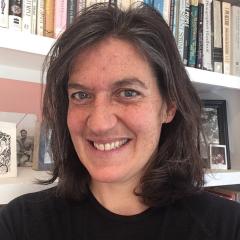
Sylvia Gale is Executive Director of Bonner Center for Civic Engagement at the University of Richmond in Richmond, Virginia. She spent the spring semester 2023 in Helsinki, Finland with Mid-Career Professional Development grant.