Blog

In many contexts, including my own, education conversations often begin with accountability, testing, or performance gaps. In Finland, conversations often begin with trust. It was a word we heard often. Teachers are trusted as professionals, students are trusted as learners, and schools are trusted as community institutions designed to support children.
We visited schools where academic rigor coexisted with calm, where breaks were frequent, and where support services were seamlessly integrated rather than treated as add-ons. Students moved through spaces that felt humane and purposeful, not rushed or transactional. The message was clear: education is not a race; it is a process of growth. The overall pace felt peaceful, not chaotic. This was proof that schools can move with purpose without moving in panic.
One phrase I kept hearing in Finland was that the system aims to create “no dead ends” for learners. Pathways may change, timelines may shift, but doors remain open. Students who struggle academically or socially are not labeled or tracked away from opportunity, but rather, they are supported until they find their footing.
This mindset stands in sharp contrast to systems that sometimes unintentionally signal to students that mistakes are permanent. In Finland, the expectation is that learning (and life) includes detours. Schools' responsibility is to ensure those detours still lead somewhere hopeful.
As a school leader, the experience made me reflect on how often we focus on efficiency, compliance, or outcomes without fully asking what school feels like for students. Finnish educators consistently asked how decisions impacted student well-being, belonging, and dignity. Academic success was important, but it was never detached from mental health or social development.
I left many conversations and lectures thinking about how leadership can create circles rather than cages, structures that support rather than restrict. Policies and systems matter, but one’s mindset shapes how those systems operate day to day. The question shifts from “How do we fix students?” to “How do we design environments where students can succeed?”
Finland is not perfect, and contexts differ, but the mindset lessons travel well. Trust, patience, and a belief in student potential are not bound by geography. Rather, they are leadership choices we can (and should) make anywhere.
Returning home, I already find myself asking different questions in meetings and decision-making spaces. Are we preserving opportunity for students, or unintentionally closing doors? Are we designing systems that assume growth is possible for everyone? Are we trusting our students and staff?
The Fulbright experience reminded me that education is ultimately about hope. And hope is built when systems refuse to give up on young people and create systems that align with that hope.

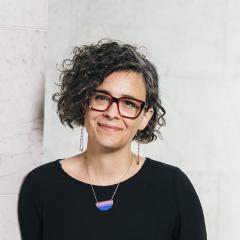
Dr. Bobbie Downs is Assistant Superintendent at Burlington County Special Services School District and Executive Director of NJASCD. A 2024 NJPSA Visionary Director of the Year, she is pursuing her MPH at Johns Hopkins as a Bloomberg Fellow. Her career began teaching Sudanese refugees in Cairo, inspiring a lifelong commitment to student and staff wellness, restorative practices, and whole child education. She took part in the Fulbright Leaders for Global Schools program in January 2026, which brought 20 U.S. school leaders to Finland for a 10-day study tour.