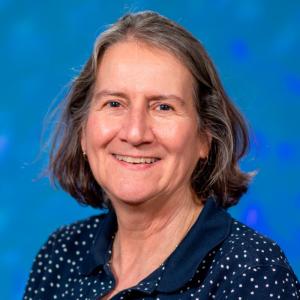
Carin Ashjian
Senior Scientist, Woods Hole Oceanographic Institution, MA
Carin Ashjian is Senior Scientist at the Woods Hole Oceanographic Institution (WHOI). She earned a Ph.D. in Oceanography from the University of Rhode Island (1991). Her research focuses on oceanography, zooplankton ecology, biological-physical interactions, and on the impact of climate change on polar ecosystems. She has extensive seagoing experience (>60 research cruises, 37 in polar regions), working from conventional research vessels, icebreakers (USCGC Polar Sea, USCGC Healy, RVIB Nathaniel B. Palmer, R/V Polarstern, CCGS Des Grosielliers), and the ice capable R/V Sikuliaq and as Chief Scientist on USCGC Healy, including a cruise to the North Pole (2022), and for the R/V Sikuliaq ice trials. She has served on national committees focusing on Arctic research and icebreakers including the US National Academies’ Committee on Emerging Research Questions in the Arctic and Committee on Polar Icebreaker Cost Assessment, and as Chair of UNOLS Arctic Icebreaker Coordinating Committee. She chaired the UNOLS Arctic Marine Research Capabilities Committee that was charged with identifying needed science capabilities for US federally owned Arctic icebreakers. Ashjian received the USCG Meritorious Public Service Award (2009), the WHOI Henry Bryant Bigelow Chair for Excellence in Oceanography (2016), and the Alaska Sea Life Center Alaska Marine Research Award (2020).
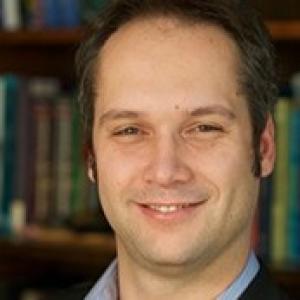
Philippe Bardet
Professor, The George Washington University, D.C.
Dr. Bardet’s research group is developing non-intrusive optical diagnostics for probing complex flows. The techniques developed in house are deployed to fluid-structure interactions, mass transfer and dynamics at liquid-gas interfaces, and turbulent wall-bounded flows. Dr. Bardet has led several in-situ experimental campaigns to instrument some of the largest experimental facilities. His research is applied to naval hydrodynamics. Dr. Bardet is the director of the ONR Consortium on Naval Enterprise Pathways (CoNEP), a large effort to develop new workforce pipelines for the Naval RD&E within the Washington, DC area through innovative research.
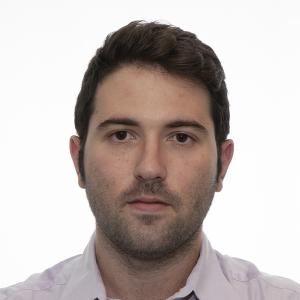
Roberto Capanna
Research Professor, The George Washington University, D.C.
Dr. Roberto Capanna is an Assistant Research Professor in Mechanical & Aerospace Engineering at The George Washington University. He earned his Ph.D. in Engineering Science from École Centrale Marseille / CEA Cadarache and holds M.S. and B.S. degrees from Politecnico di Milano. His research specializes in fluid–structure interaction (FSI), experimental thermal-hydraulics, and advanced non-intrusive optical diagnostics. Dr. Capanna leads experimental initiatives in flow-loop design, high-speed imaging, fiber optic diagnostic systems, and refractive index-matched materials. Beyond nuclear reactor safety, his interdisciplinary reach includes optical neural networks and microalgae harvesting for biofuels. An active mentor and educator, he regularly contributes to international research collaborations at the intersection of fluid dynamics, energy systems, and applied optics.
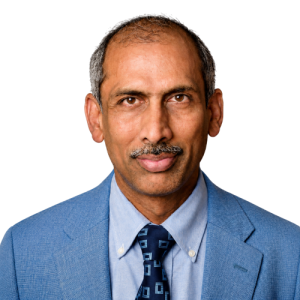
Raju Datla
Research Professor, Stevens Institute of Technology, NJ
Raju Datla is a Research Professor in the Department of Civil, Environmental and Ocean Engineering at Stevens Institute of Technology. He is also a US NAVSEA Professor of Naval Engineering. He manages the experimental marine hydrodynamics research at the university’s Davidson Laboratory. His expertise is in the areas of high-speed craft hydrodynamics and ocean engineering in which he prepared more than 60 technical articles. He teaches courses to undergraduate and graduate students in naval and ocean engineering at Stevens and served as principal advisor to 6 PhD dissertations and more than 50 master’s and undergraduate theses and design projects. He received his Ph.D. in Ocean Engineering from Stevens Institute of Technology. He is a Fellow of the Society of Naval Architects and Marine Engineers (SNAME) and the Royal Institution of Naval Architects (RINA).
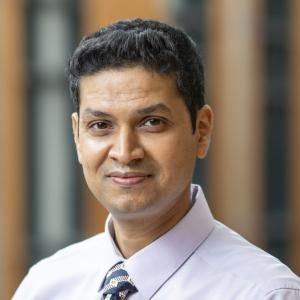
Ravindra Duddu
Associate Professor, Vanderbilt University, TN
Ravindra Duddu is an Associate Professor at Vanderbilt University located in Nashville, Tennessee. His research interests are in computational solid mechanics with a focus on multi-physics modeling of material damage evolution. He has pioneered the use of continuum damage mechanics and phase field models for simulating fracture in glaciers and ice shelves. He is a recipient of the US NSF early CAREER award, USIEF Fulbright Kalam-Climate Fellowship, UK The Royal Society International Exchanges Schemes award, to advance the modeling of iceberg calving using novel computational methods. He is a member of American Society of Civil Engineers (ASCE), American Geophysical Union (AGU), and the Chair of United States Association for Computational Mechanics (USACM) Earth and Energy Systems (EES) Technical Thrust Area.
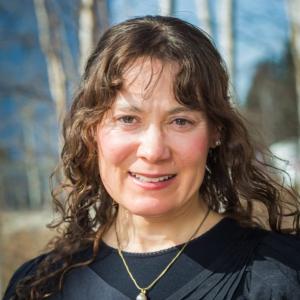
Eugenie Euskirchen
University of Alaska President's Arctic Professor, University of Alaska Fairbanks, AK
I am the University of Alaska President’s Arctic Professor, with a joint appointment between the Institute of Arctic Biology and the Department of Biology. During the 2024- 25 academic year, I was a Fulbright Scholar in Finland hosted by colleagues at the University of Lapland, University of Helsinki, and University of Oulu for the ‘Seeking Solutions for Global Challenges’ Award of Fulbright Finland Foundation. My research focuses on climate feedbacks in arctic ecosystems. This encompasses long-term measurements and ecosystem simulation modeling, with a focus on the development of ecosystem models optimized for high-latitude permafrost regions. I have been the lead author or co-author on ~170 articles related to this measurement-based and modeling research. I teach classes on climate change in high-latitudes to undergraduate students from a broad range of backgrounds and interests. I am currently the institutional lead for the US Department of Energy’s Next Generation Ecosystem Experiment – Arctic Project, which currently includes a focus on pan-Arctic ecosystem modeling.
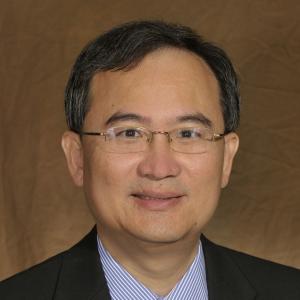
Joshua Fu
Chancellor's Professor, University of Tennessee Knoxville, TN
Joshua S. Fu, Ph.D., BCEEM, is Chancellor’s Professor in the Department of Civil and Environmental Engineering at the University of Tennessee, Knoxville, with a joint appointment at Oak Ridge National Laboratory. He is a Fellow of AAAS and A&WMA and serves as a member of the Arctic Council AMAP Expert Group on Short-lived Climate Pollutants. His research focuses on air quality and climate modeling, atmospheric composition, short-lived climate pollutants, wildfire smoke, atmospheric deposition, and AI-enabled environmental prediction. He has contributed to WMO, AMAP, UNECE HTAP, and measurement–model fusion initiatives, and has led or collaborated on projects involving climate–air quality interactions, long-range transport, exposure assessment, and policy-relevant environmental decision support.
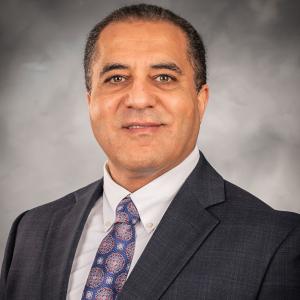
Ahmed Ibrahim
Associate Professor, U.S. Naval Academy, MD
Dr. Ahmed Ibrahim is an Associate Professor of Naval Architecture and Ocean Engineering at the U.S. Naval Academy. Holding a Ph.D. from the University of Houston and bringing years of industry experience from the American Bureau of Shipping, his expertise centers on ship structural responses. Crucially, Dr. Ibrahim leads vital research on the structural impact of ice loads on naval vessels. Supported by the Office of Naval Research, his recent projects investigate the inherent sea-ice resilience of Navy surface ships and assess the ice-impact tolerance of non-ice-class ships using energy conservation approaches. This pioneering, ice-focused research is instrumental in preparing vessels for polar environments. Additionally, he employs hydroelastic model testing and numerical simulations to predict global hydrodynamic loads.
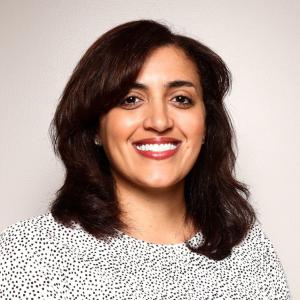
Anna Jackson
Director, Pre-Award and Sponsored Programs, The University of Chicago, IL
Anna Jackson is a research administration professional with over a decade of experience. She is the Director of Pre-Award and Sponsored Development Services at University Research Administration at The University of Chicago. Anna oversees the University’s pre-award operations, including proposal development services as well as the institutional review, approval, and endorsement of proposals for sponsored funding. She was a member of NCURA’s Select Committee on Global Affairs, an NCURA Global Fellow in Australia, and part of the delegation for the Finland-US Research Security Partnership Building Forum in collaboration with FARIA, NCURA, Aalto University, University of Helsinki, Fulbright Finland Foundation, and the Research Council of Finland. She would like to continue to build these global collaborations in research and research administration.
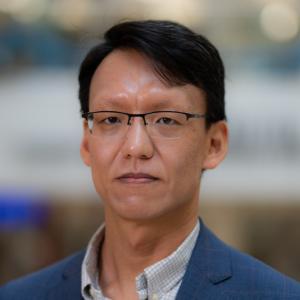
HeonYong Kang
Assistant Professor, Texas A&M University, TX
HeonYong Kang earned Ph.D. in Ocean Engineering at Texas A&M University in 2014 and started a tenure-track Assistant Professorship in 2020. Dr. Kang’s research interests encompass Ocean Energy, Fluid-Structure Interaction, and Ocean Autonomy. His academic contributions aim to advance foundational understanding, numerical methods, and engineering designs in these fields, solving real-world challenges such as understanding coupled interactions between complex offshore energy structures’ deformation and ocean environments, identifying competitive wave energy conversion, and achieving accurate autonomous control of ocean vehicles. He has published 15 SCI journal articles with high impact factors (IF) up to 11, five of which, including the highest IF, have his students as the first author. He also published 2 patents, one of which is registered internationally with commercialization through an exclusive license agreement. As Principal Investigator (PI) mostly, Dr. Kang has secured continuous external research funding exceeding $2.1 million. Furthermore, he has jointly formed and been operating an industry research consortium. Dr. Kang’s overarching goal is to solve challenges critical to human life such as energy and inevitable ocean or other stochastic operations through advancing the knowledge in interactions between stochastic environments and object(s), which feature fluid-structural dynamics, autonomy, and energy transformation.
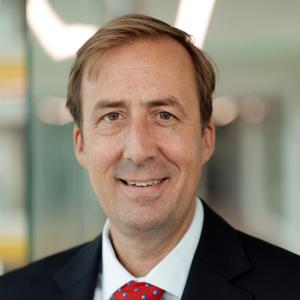
Kevin Maki
Professor, University of Michigan, MI
Kevin Maki is a Professor of Naval Architecture and Marine Engineering at the University of Michigan and Director of the Aaron Friedman Marine Hydrodynamics Laboratory. His research addresses high-Reynolds number fluid mechanics and ship performance, spanning computation and experiment, with current emphasis on generative AI for the ocean and hydrodynamic design. He has held appointments at the Naval Surface Warfare Center Carderock Division and the Italian Ship Model Basin, and co-organizes the Isaac Newton Institute programme "Mathematics for Marine Technology" at Cambridge. He founded the OpenFOAM Marine Special Interest Group, serves on the ITTC Advisory Committee, and co-chairs a NATO AVT panel on ship maneuvering in waves. He has graduated 19 doctoral students and taught 11 courses over 20 years.
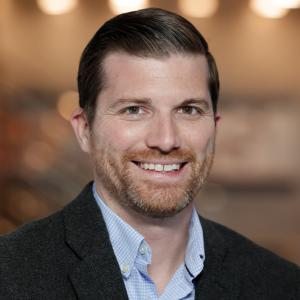
Thomas McKenney
Associate Professor of Engineering Practice, University of Michigan, MI
Dr. Thomas McKenney is an Associate Professor at the University of Michigan, leading research in ship design, maritime systems, and advanced technologies. Previously, he was Head of Ship Design at the Mærsk Mc-Kinney Møller Center for Zero Carbon Shipping and held senior roles at Royal Caribbean Group. He holds four degrees, including a Ph.D. focused on early-stage ship design methods.
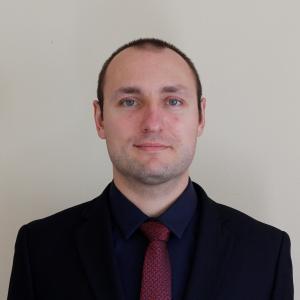
Andrii Murdza
Lecturer / Laboratory Manager, Dartmouth College, NH
Dr. Andrii Murdza is a Research Scientist, Laboratory Manager, and Lecturer at the Thayer School of Engineering at Dartmouth College. His research focuses on the mechanical behavior and fracture of freshwater ice, sea ice, snow, and other brittle materials, with applications in Arctic engineering, climate science, and planetary exploration. He leads experimental research on ice mechanics, fracture processes, cyclic loading, and ice–structure interaction, and collaborates with researchers from academia, government, and industry. Dr. Murdza serves as Co-Investigator on a NASA EPSCoR project and has published more than 21 peer-reviewed journal articles. He is interested in strengthening international collaborations that advance Arctic research, engineering innovation, and safe, sustainable operations in polar environments.
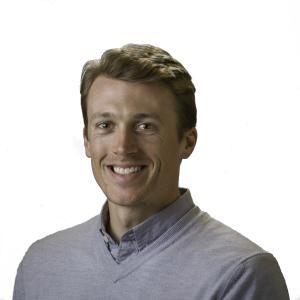
Devin O'Connor
Principal Member of Technical Staff, Sandia National Laboratories, NM
Devin O’Connor is a Principal Member of Technical Staff at Sandia National Laboratories, specializing in computational solid mechanics with an emphasis on meshfree methods, geomechanics, and Arctic sea ice dynamics. He received a U.S. Department of State Embassy Science Fellowship to work with researchers in New Zealand on Antarctic sea ice dynamics models, as well as a National Research Council Fellowship from the U.S. National Academies of Sciences. He holds a PhD in Mechanical Engineering from Northwestern University. Before joining Sandia, he worked at the U.S. Army’s Cold Regions Research and Engineering Laboratory, developing computational models for snow and ice mechanics, and at the National Institute of Standards and Technology.
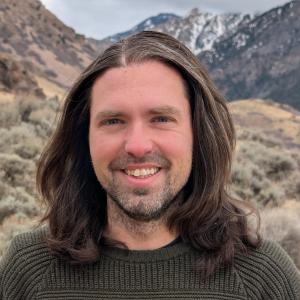
Matteo Petit Bon
Assistant Professor, North Carolina State University, NC
Matteo Petit Bon is an Assistant Professor of Ecosystem Ecology at NC State University and leads the Tundra Ecology and Dynamics Laboratory. He is a plant and ecosystem ecologist whose research examines how climate change, coastal flooding, and herbivory alter Arctic vegetation, biogeochemical cycling, and ecosystem functioning. His field research spans Svalbard, northern Norway, and western Alaska, with particular emphasis on tundra and coastal ecosystems. He develops collaborative, field-based research across institutions and countries and contributes to international Arctic research networks. At NC State, he is building a research program linking Arctic environmental change, ecosystem monitoring, and responsible international collaboration. He brings an ecological perspective to questions surrounding expanded Arctic access, infrastructure, and research activities.
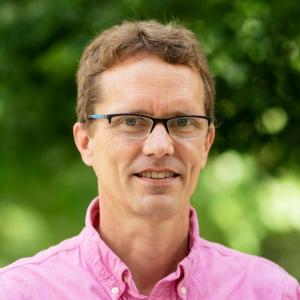
Carl Renshaw
Professor, Dartmouth College, NH
Dr. Carl Renshaw’s research focuses on experimental and theoretical investigations of failure mechanisms in ice and related crystalline materials. His significant contributions include advancing the understanding of localized failure in ice under low and high confinement, as well as the brittle-to-ductile transition. His recent work examines how damage influences the strength of ice, how cracks interconnect to form permeable networks, and how injection rate affects crack geometry during hydraulic fracturing.
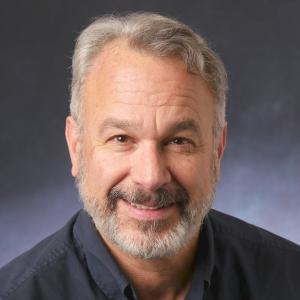
Theodore Scambos
Senior Research Scientist, University of Colorado Boulder, CO
Dr. Ted Scambos is a Senior Research Scientist at the Earth Science and Observation Center at the University of Colorado in Boulder. He specializes in using satellite data to map polar ice and track it changes, studying the effects of climate change in the Arctic, Antarctica and the Southern Ocean. Among his research interests are ice sheet mass balance, ice shelf and outlet glacier dynamics, sea ice and climate change, and polar geophysical instrumentation. He has studied the collapse of Antarctic Peninsula ice shelves, sea ice and fast ice impacts on coastal glaciers, climate and sea ice trends in the Arctic, and wind-snow interactions on the East Antarctic Plateau. Dr. Scambos was Lead Scientist at the National Snow and Ice Data Center for 14 years. He has twenty Antarcitc expeditions and four research cruises on icebreakers (Aurora Australis, Irizar, Palmer, and Araon) and lectured on two National Geographic cruises. He has authored or co-authored ~180 scientific articles, with funding from NASA, NSF, and USGS.
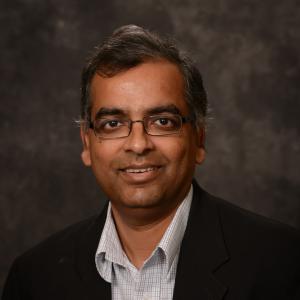
Arun Srinivasa
Associate Dean for Student Success, College of Engineering and J. N. Reddy Professor of Applied Mechanics, Department of Mechanical Engineering, Texas A&M University, TX
Dr. Arun Srinivasa is the Associate Dean for Student Success in the College of Engineering and the J.N. Reddy professor of Applied Mechanics at Texas A&M University, where he has served for over 30 years. His research spans computational mechanics, fracture and fatigue, materials processing, continuum dynamics, biomechanics, and continuum thermodynamics, with over 150 peer-reviewed journal publications and three books. He has also published extensively on the use of artificial intelligence to improve teaching and learning. His educational interests focus on inclusive, technology-enabled instruction and quantitative design and decision-making in engineering education. He served as Co-PI and director of the NSF RED (Revolutionizing Engineering Departments) project to promote continuous innovation in engineering education. Dr. Srinivasa has received numerous national and university honors, including the ASME Ben Sparks Medal, Worcester Reed Warner Medal, ASEE Archie Higdon Medal, Texas A&M Distinguished Achievement Award for Teaching, and the University Professorship for Undergraduate Teaching Excellence.
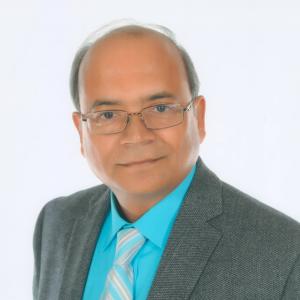
Alok Verma
Department Head, Texas A&M University, TX
Dr. Alok K. Verma is a Professor, Powell Chair, and Head of the Marine Engineering Technology Department at Texas A&M University in Galveston, TX. Dr. Verma received his B.S. in Aeronautical Engineering from the renowned institution IIT Kanpur, an M.S. in Engineering Mechanics, and a Ph.D. in Mechanical Engineering from ODU. Prof. Verma is a licensed professional engineer in Virginia and a certified manufacturing engineer with certifications in Lean Manufacturing and Six Sigma. Dr. Verma’s scholarly publications include more than 100 journal articles and conference proceedings papers, and over 50 technical reports. Dr. Verma is the recipient of the McGraw-Berger Award and Isadore T. Davis Award from the American Society for Engineering Education (ASEE) for contribution to Engineering Technology Education, the Regional Alumni Award for Excellence for contribution to Lean Manufacturing research, the International Education Award at ODU, and the Ben Sparks Medal by the American Society of Mechanical Engineers (ASME).