Fulbright Finland News Magazine
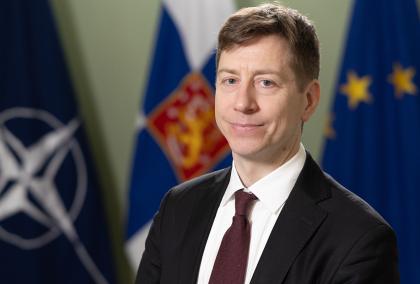
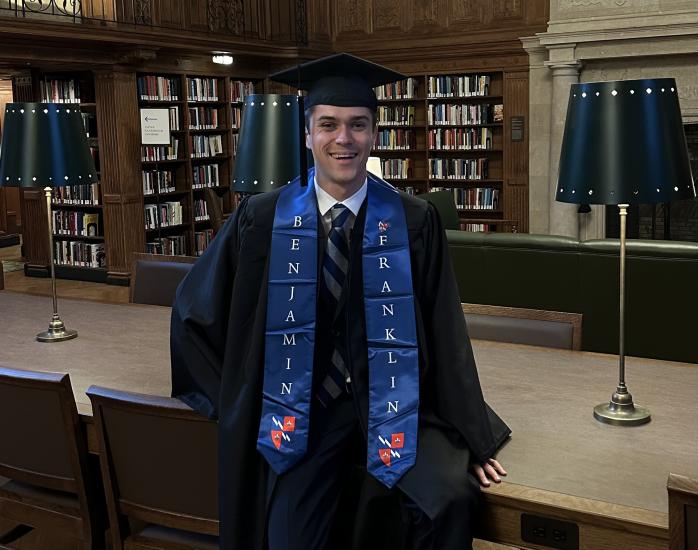
When Patrik Haverinen first set his sights on studying in the United States, he couldn’t have imagined the opportunities that decision would open up. Four years on, after earning a degree in Global Affairs at Yale University and as a Fulbright Finland Undergraduate Program grantee and a Renewal Grant recipient, he finds himself once again preparing to return across the Atlantic – this time as a diplomat trainee as part of the EU delegation in Washington, D.C.
“Fulbright Finland gave me more than an opportunity to study,” he says. “It gave me a network, a community, and a way of thinking about the world – as something to explore, understand, and connect.”
What attracted him to study in the U.S. in the first place?
Patrik recalls exploring his options while completing military service after high school, and being struck by the opportunities offered by the U.S. liberal arts model, a system that allows students to explore multiple fields before specializing. “I realized that the liberal arts approach doesn’t really exist in Finland or Europe,” he recalls. “I wanted the chance to study across disciplines and learn in a more open academic environment.”
However, applying to U.S. universities quickly raised practical questions about funding. While Yale ultimately offered him virtually a full scholarship, Patrik says the Fulbright Finland Undergraduate Program was invaluable, providing him not only with additional financial support for his studies, but connecting him with a network that could help him find his place in the U.S. as someone with no previous ties there.
The Fulbright Finland Foundation, he notes, envisages participating Finnish students as
“citizen diplomats,” encouraged to share Finnish culture and act as ambassadors for their country, at the same time as learning from others. The emphasis on curiosity, leadership, and a commitment to connecting across cultures were all aspects which immediately struck a chord, Patrik explains.
At Yale, Patrik majored in Global Affairs, earned a certificate in French, and participated in the university’s journalism program. His time there coincided with a critical period in transatlantic relations, he recalls. “When Russia invaded Ukraine, suddenly everyone wanted to know how Finland saw the security situation,” he recalls.
“I remember walking through Times Square and seeing the news that Finland was applying to join NATO. That’s when I thought, I couldn’t be here at a better time – hopefully in my own, very small way, to help people understand our history, where we come from, and how massive of a shift in foreign policy this was.”
“I actually adored the ‘citizen diplomat’ part of the role. I think it’s so incredibly important, especially in this time of history, to have people who not only know their home country really well and have the resources and the networks there, but also are brave enough to take another step and go somewhere else and share that wisdom with those people and also learn from them.”
However, “it’s definitely a two-way street,” he stresses. “I was there to learn from Americans and from the international community. That really enriched my experience.”
“I think the whole idea of Fulbright is to get that kind of exchange – it’s about informal relationships. It’s not just about big events where people say the same things they’ve said a million times before. It’s about forming meaningful relationships where you can ask difficult questions as well.”
Fulbright Finland gave me more than an opportunity to study. It gave me a network, a community, and a way of thinking about the world – as something to explore, understand, and connect.
And beyond the academic sphere, Patrik’s time in the U.S. left him with some valuable cultural insights – which he says continue to influence him back on home ground. “I think one main thing I learned is definitely about communication – being able to say what you mean in a very concrete, easy-to-understand way,” he says.
“In Finland, the more complex you are in your words, the more respect you get sometimes. In the U.S., it’s the opposite. It’s a really great trait to be able to talk to people in terms they understand, and that’s something I took away.”
The sense of community was also central to his experience, he explains. “In the U.S., people make an effort to include you – they’ll invite you to their homes, to Thanksgiving dinners, even if they’ve just met you,” he says. “That kind of welcoming community left a big impression on me, and it’s something I want to bring back to Finland as well.”
Throughout his studies, he remained closely connected with the Fulbright Finland Foundation.
“The staff were always kind and supportive,” he says. “Even if I didn’t need concrete help, it was reassuring to know that someone was there to reach out to if things got complicated.” Regular check-ins, online meetings, and alumni events also helped him build networks that extended beyond Yale – and continued back in Finland with alumni gatherings, including most recently the U.S. Embassy’s annual Fourth of July celebration in Helsinki.
“It’s not just a scholarship – it’s a support system and a community,” he notes. “When you meet another Fulbright Finland alum, you immediately have common ground. Everybody’s always so excited to talk about their Fulbright experience. They always use such big words. They’re always really smiling. They’re always happy to tell you how these connections shaped the kind of person they’ve become.”
Patrik’s commitment to sharing his experience led him to receive the Fulbright Finland Renewal Grant for three consecutive years, recognizing his continued outreach work. He has participated in a variety of articles and media coverage on his experience, including an interview published on the Yale University website. His enthusiasm about Fulbright comes naturally, he explains: “I was very happy to take part in these experiences - everything’s been really great.”
His outreach work continues through Project Access Finland, a non-profit organization that mentors high-school students applying to universities abroad, where he helps young Finns navigate international admissions and scholarship opportunities.
“At our summer bootcamp, I spoke about studying in the U.S. and about Fulbright Finland Foundation’s programs,” he says. “It’s rewarding to see how excited students are about the idea of studying overseas.”
His advice to Finnish students considering studying abroad is straightforward. “I just tell them to go for it. I think the really great thing about the U.S. is that it fosters this really curious intellectual community in most of its universities. And I think that’s what a lot of us are craving here in Finland… Embrace change, embrace challenges that might lie ahead. Choose something that works now – you can always pivot later.”
After graduating, Patrik drew on his journalism studies at Yale, spending the summer working as a journalist for Uusi Juttu, a new Finnish digital media start-up, having previously worked for Helsingin Sanomat, the country’s largest newspaper. Journalism, he says, strengthened his ability to analyze and communicate clearly. “It teaches you to listen, to ask good questions, and to think about how information connects people,” he notes. He is also expanding his knowledge of political science and international relations, by embarking on a master’s degree in World Politics at the University of Helsinki.
This fall sees him returning to the U.S., this time to Washington, D.C., in a role which will draw on his previous transatlantic experience, as well as his communication and diplomatic skills, with a five-month posting within the Delegation of the European Union to the United States.
Here, as part of a team representing the EU at this crucial time in international relations, he will be working in the political section on issues ranging from foreign policy to domestic affairs.
It’s an exciting step – but it also feels like a natural continuation, he explains.
“The delegation acts as a sort of bridge between the European Union and the U.S., which is exactly what I’ve been doing on a much, much smaller scale before through Fulbright Finland. So I’m really happy to continue this kind of path, and I think it matches not only my interests and passions, but also luckily the kind of role that I’ve been able to serve before as well.”
“This is exactly the kind of moment where not only citizen diplomacy but actual diplomacy is very much needed. We need to increase mutual understanding, because there’s been a lot of misunderstandings between Europeans and Americans in many different areas. I’d be happy to help in my small way to bring those together.”
Read the whole Fulbright Finland News magazine 2/2025!