Fulbright Finland News Magazine
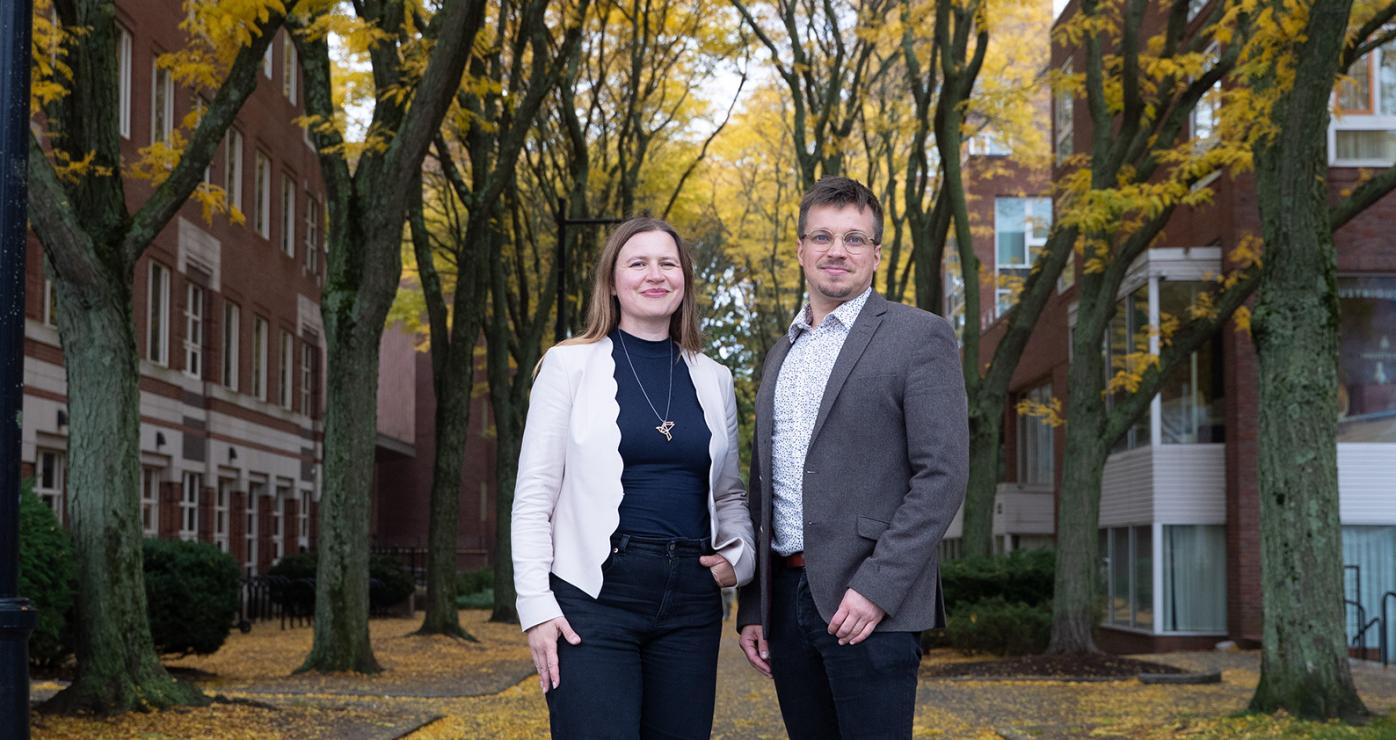
The current fourth Fulbright Arctic Initiative cohort includes three Finnish researchers – Tanja Joona, Juho Kähkönen, and Alexandra Middleton – and U.S. scholar Heather Gordon, who recently completed her exchange in Finland. This fall, three of them were on their individual exchanges and now reflect on their experiences.
Alexandra Middleton
Fulbright Arctic Initiative IV Scholar, Harvard University, Kennedy School of Government
Postdoctoral Researcher, University of Oulu
My six-week stay in Boston began in October 2025, when Finland was already experiencing freezing temperatures. Amidst the intense heat of 30°C, Boston welcomed me with its vibrant international atmosphere and sense of easygoing freedom.
I am residing at the Harvard Belfer Center’s Arctic Initiative, pursuing my project, which has been in development for over a year. My research, which focuses on Arctic socio-economic development, aligns perfectly with the Fulbright Arctic Initiative’s goals of promoting science diplomacy and advancing Arctic knowledge.
On the second day after my arrival, I participated in an Arctic security workshop with visitors from Norway, focusing on the Arctic security domain. Later, I spoke at the seminar “On Thin Ice: Stories of Trust (and Mistrust) in Arctic Research and Policy.” My fellow panelists and I explored how researchers can best build trust in Arctic communities, which have often been exploited and colonized.
Reflecting on the seminar, trust emerged as a key takeaway from my visit. The media often shapes the narrative of the U.S. focusing on difficulty and political instability, and from across the Atlantic, it is not always easy to grasp reality here. However, my time at Harvard has been incredibly welcoming, offering a different view that has nothing to do with the negativity, hostility, and hatred that one might encounter in mass media.
Is it a Harvard bubble that creates this effect? I believe that both the people and values of the institution create it. This stems from the burning desire of people to learn, question, and engage in dialogue.
However, it is the institution that provides a safe space where students and faculty are open to
constructive engagement and treated equally. We all contribute through our diverse backgrounds, personal stories, and understanding of peace and justice. I experienced this unity in the values of the people and the institution at every seminar and event I attended.
But this openness was not confined to campus; when I experienced human connection in everyday life, sharing conversations on the street, and in coffee shops, I found that these small interactions were all part of my unique immersion into the U.S. and building trust with the place and its people.
The most important lesson is to take a leap of trust and test it for yourself, rather than being guided by external force.
Juho Kähkönen
Fulbright Arctic Initiative IV Scholar, Harvard University, Kennedy School of Government; Dartmouth College
Researcher, University of Lapland
What is it like to conduct climate research at Harvard these days? The briefest answer was given by Alan Garber, the president of Harvard University, in the opening speech of the university’s annual Climate Action Week. Referring to Kermit the Frog, Garber emphasised how “it’s not easy being green.”
The tension in U.S. politics is palpable, with research institutions and departments nationwide
closing down. Research in climate and environmental studies is under unprecedented pressure. Grants are being terminated. Amidst all that is happening elsewhere, it feels surreal to be at Harvard and to carry out well-supported research on changes in the Arctic.
Conducting research at Harvard has been enriching as the university continues its dedicated work. At the Belfer Center’s Arctic Initiative, our team comprises a fabulous group of international colleagues.
Together, some of the world’s most pressing issues are addressed. Many of us have Fulbright grants. Including myself, four of us possess the Fulbright Arctic Initiative IV grant.
Fulbright has done remarkable work to enhance Arctic research, and there is more to come. I am enthusiastic about the latest Fulbright Finland Foundation’s grant program, which will enable U.S. academics to visit and conduct research at my Alma Mater, the University of Lapland. It is an excellent addition to the strong linkages between the United States and the northernmost university in the EU, formalised through the unique American Arctic Connection agreement in 2021. Similarly, scholars at Harvard recognise the importance of conducting research there, where the action truly takes place.
I rarely have coffee breaks at the Belfer Center without being asked about the ongoing transitions in the Arctic. People are aware that the region is warming faster than any other part of the world.
The first ice-free days in the Arctic Ocean could happen before 2030. Changes will become irreversible. My research explores what all of this signifies for logistics occurring on Indigenous peoples’ lands.
The question is vast.
Humanity is entering an unprecedented period in which several tipping points will be reached, with severe impacts on ecosystems and human societies. Universities in the Arctic now stand at the forefront of global debates. Flexible institutions are fundamental to solving wicked problems. Through bold collaboration, tackling risks becomes achievable.
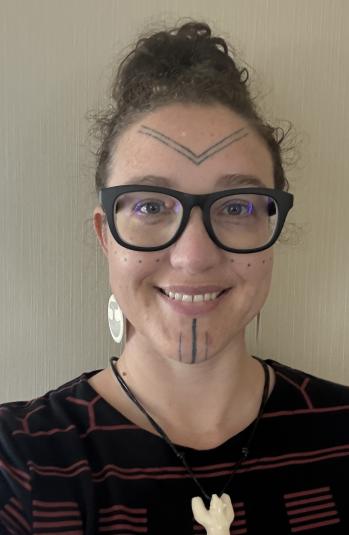
Heather Gordon
Initiative IV Scholar, University of Lapland
Assistant Research Professor, American University; Founder and Principal Consultant, Sauyaq
Solutions Consulting
Heather Gordon from the American University is a scholar of Indigenous studies and works with Indigenous Nations and communities on research, evaluation, and technical assistance in support of human rights and environmental justice.
During her exchange visit to Finland, she visited the Arctic Center of the University of Lapland and traveled across Sápmi and conducted research on policies that can inform U.S. federal policy around land and water management through Indigenous governance.
“One of the most important lessons I am bringing back to my Alaska Native community from my Indigenous relatives in Sápmi is this: While land and ocean subsistence harvesting management in Alaska is undeniably complex (requiring engagement with at least seven different agencies) this complexity can distract us from the more urgent and critical questions of land and ocean use and development.
Extractive industries, mining, constructing roads, and oil and gas drilling, directly impact our
environments and communities. Colonial bureaucracies seek to channel our energies into defending our right to harvest, while obscuring development and use decisions that determine whether harvesting remains possible at all.
Using our sovereignty to bring our relational Knowledges and Sciences into use decisions is critical, as unchecked extraction may ultimately destroy the very environments that sustain fishing and other forms of harvesting.”
The Fulbright Arctic Initiative is a program of the U.S. Department of State’s Bureau of Educational and Cultural Affairs. In Finland, the program is managed by the Fulbright Finland Foundation.
Read the whole Fulbright Finland News magazine 2/2025!